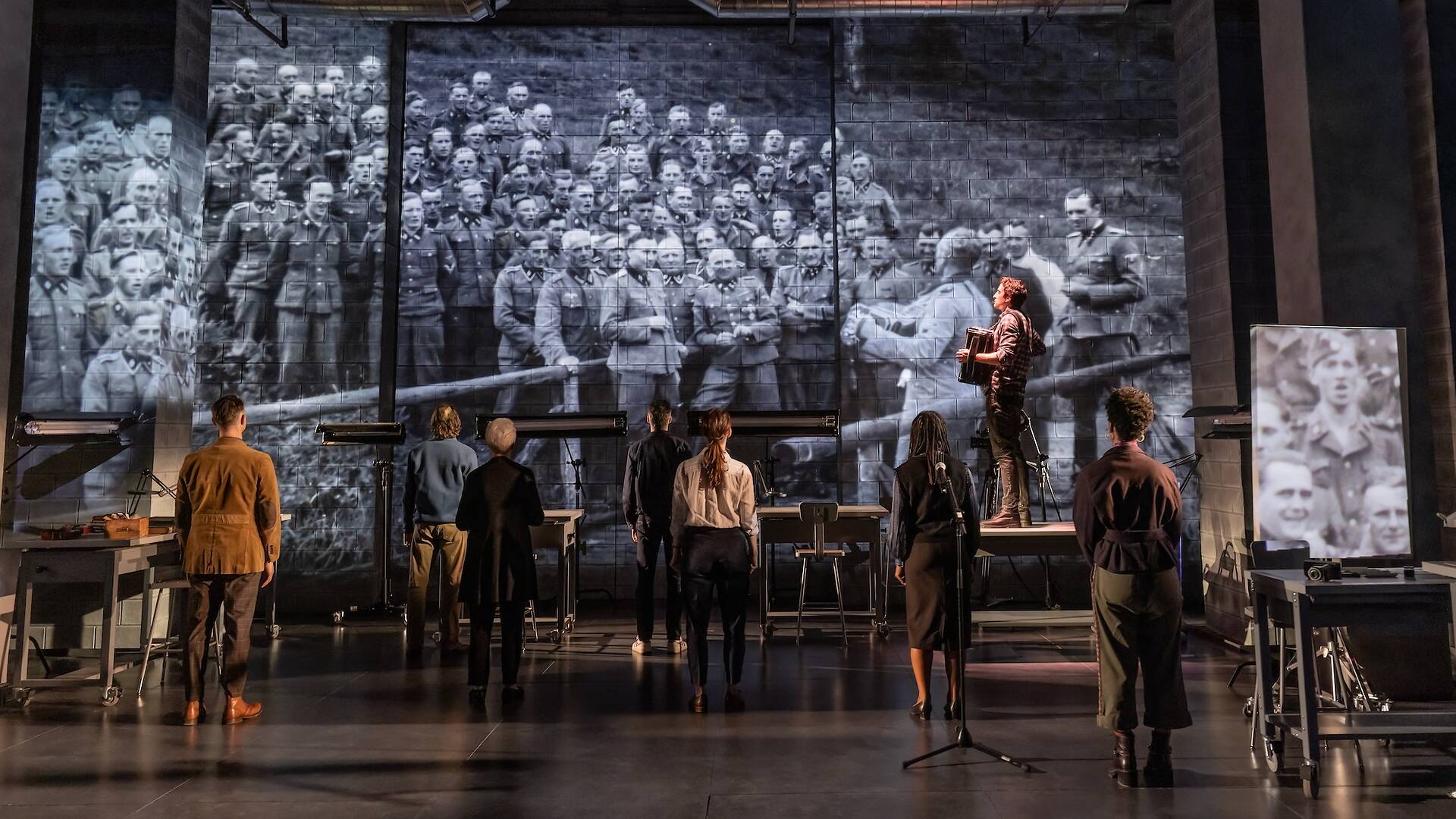
A photo album donated to a museum
Here There Are Blueberries begins with the discovery of a photo album connected to SS officer Karl Höcker. The United States Holocaust Memorial Museum received the album in 2007 after a former U.S. Army intelligence officer contacted the Museum. Its first page was marked with the place and date Auschwitz, June 21, 1944.
The album contains 116 photographs taken in and around Auschwitz between May 1944 and January 1945. The images show Nazi officers and staff at official and social events. The Museum notes that the photographs do not show prisoners, gas chambers, or crematoria; their significance lies in what they reveal about perpetrators’ lives and relationships.
Why the images prompted research
Museum staff examined the album’s materials and used the names, locations, and surrounding historical record to identify people and events. The collection includes images from Solahütte, an SS retreat near Auschwitz. One handwritten caption—‘Here there are blueberries’—inspired the play’s title.
The contrast is difficult: casual leisure photographs exist alongside the machinery of mass murder. The play asks audiences to confront that contrast without suggesting that the photographs alone tell the entire story of the Holocaust.
Separate archival fact from stage storytelling
The Museum’s collection and research are the historical record. The play adapts that investigation into theatre, using dialogue and structure to make questions visible to an audience. It is based on real events, but it is not a literal staging of every archival detail.
For the production’s schedule and visit details, see Here There Are Blueberries Broadway tickets and schedule.
Production schedules and credits can change. Check official sources for current information.